

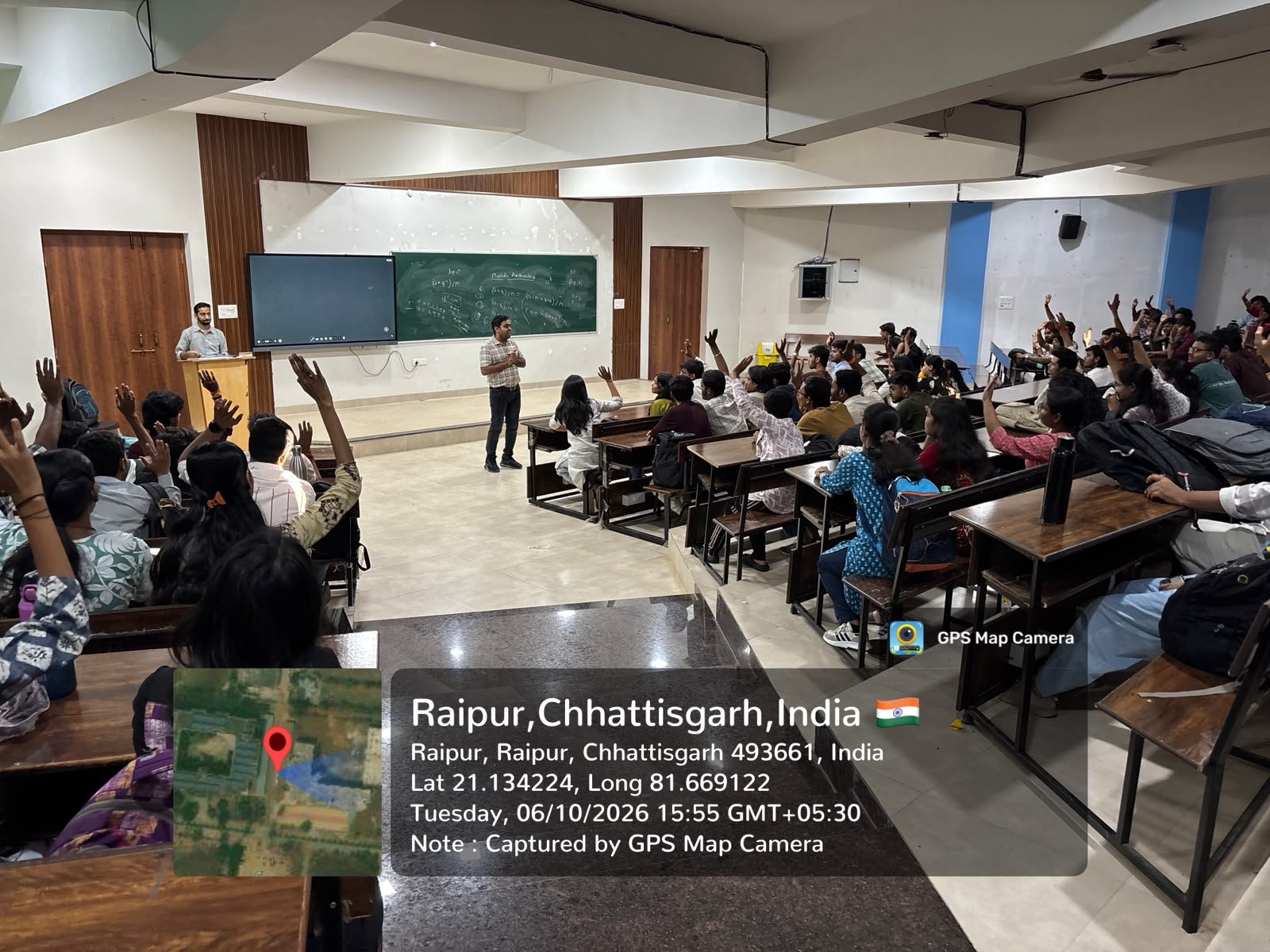
Raipur, October 6, 2026: The Department of Computer Science and Engineering (CSE) at Shri Shankaracharya Institute of Professional Management & Technology (SSIPMT), Raipur, organised an intensive ICT Tool Training Programme on Cloud Skills and Claude AI, providing 89 B.Tech students with exposure to emerging technologies shaping modern software development and cloud computing.
The programme aimed to bridge the gap between academic learning and evolving industry requirements by introducing students to the practical applications of generative artificial intelligence, cloud technologies and AI-assisted development workflows. The training emphasised the importance of combining core engineering knowledge with modern digital tools to solve technical problems more efficiently.
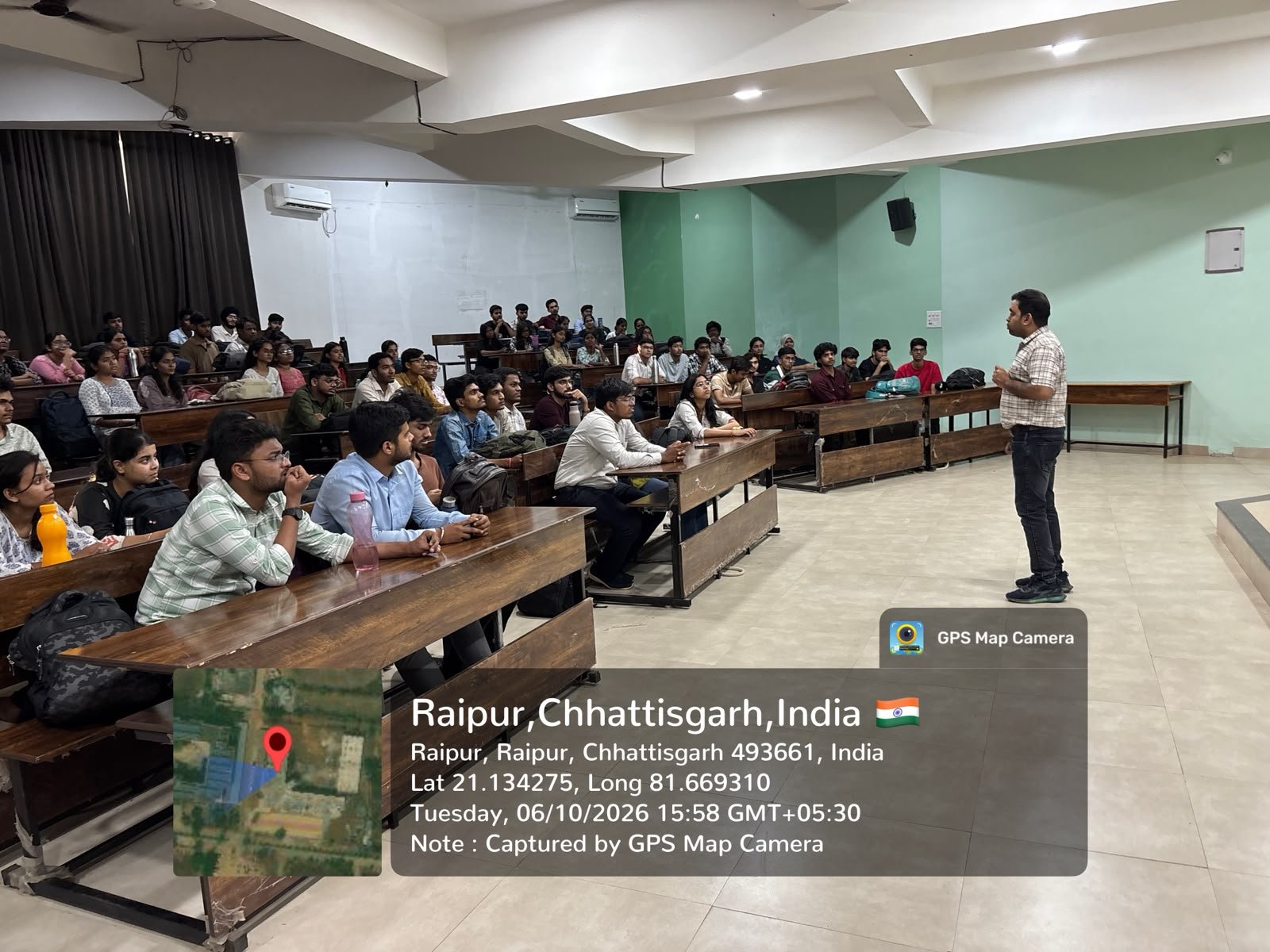
The programme was coordinated by Mr. Vaibhav Chandrakar, Assistant Professor, Department of Computer Science and Engineering, who also served as the keynote speaker and guided participants through the technical sessions.
Exploring Claude AI and Modern Cloud Technologies
A major highlight of the training was the session on Claude AI and its applications in software development and cloud environments. Students explored how AI tools can support coding, technical documentation, infrastructure planning, debugging and other software engineering tasks.
The programme introduced participants to the growing role of generative AI in development workflows and highlighted how well-structured prompts and appropriate context can improve the usefulness of AI-generated responses.
Through technical explanations and practical demonstrations, students gained insights into using AI as an assistive tool for analysing technical information, developing solutions and improving productivity.
Advanced Prompt Engineering and Context Management
The training covered prompt engineering techniques for communicating technical requirements clearly to AI systems. Participants explored how precise instructions and relevant context can help AI tools address complex coding tasks, support architectural planning and assist in preparing infrastructure documentation.
The session also introduced the importance of context management when working with large codebases and cloud configuration files. Students learned about the need to provide relevant information, validate generated outputs and review AI-assisted recommendations before applying them to real projects.
AI-Assisted Cloud Infrastructure Automation
Another key area was the use of large language models (LLMs) to support cloud infrastructure automation. The discussion introduced Infrastructure as Code (IaC) and the role of AI in drafting, reviewing and improving infrastructure configuration scripts.
Examples included tools and technologies such as Terraform, AWS CloudFormation and Kubernetes manifests. These technologies illustrated how infrastructure requirements can be represented through code and how AI assistance may support configuration, documentation and troubleshooting.
The session highlighted that AI-generated infrastructure code must be carefully reviewed and tested to ensure correctness, security and compatibility with the intended environment.
Understanding Claude Skills and Custom Workflows
Participants were also introduced to Claude skills and custom AI-assisted workflows. The session explored how specialised capabilities, tool use and API integrations can support recurring technical tasks.
Potential applications discussed included log analysis, debugging workflows, development assistance and routine cloud operations. These concepts helped students understand how AI tools can be integrated into broader software development processes rather than used only for individual questions or isolated coding tasks.
The training encouraged students to consider how reusable workflows can improve consistency and efficiency while keeping human oversight central to technical decision-making.
Cloud AI Security and Responsible Practices
The programme also addressed security and best practices when using AI tools in cloud-based environments. Topics included secure data handling, API token management and responsible use of AI in enterprise technology settings.
Students were encouraged to exercise caution when sharing source code, configuration files or other sensitive information with AI tools. The discussion reinforced the importance of protecting credentials, reviewing generated recommendations and following appropriate security and ethical practices when integrating AI into development workflows.
These considerations helped place the technical capabilities of generative AI within the broader context of secure and responsible software engineering.
Expert-Led Demonstrations and Interactive Learning
Mr. Vaibhav Chandrakar led the training through technical explanations, live demonstrations and interactive problem-solving activities. The sessions connected conceptual learning with practical applications, helping students explore how AI tools can support cloud-based software development.
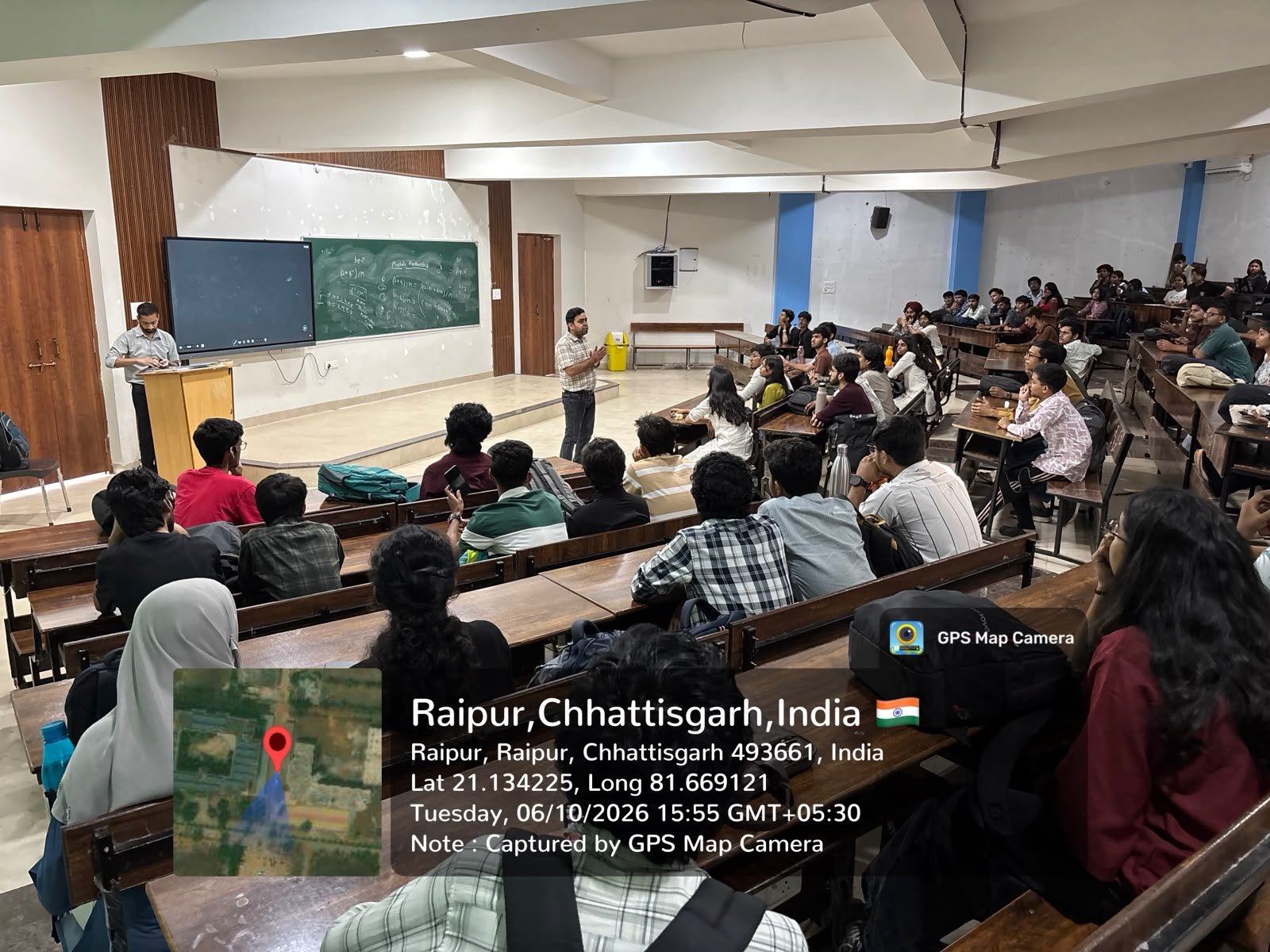
He emphasised the importance of adaptability and continuous learning in a rapidly evolving technology sector. He also highlighted that artificial intelligence should be viewed as a collaborative engineering tool that can enhance human capabilities rather than replace sound technical judgement.
The interactive question-and-answer session gave participants an opportunity to discuss project ideas, prompt engineering practices and the integration of AI models into cloud platforms.
Preparing Students for an AI-Driven Technology Industry
The ICT Tool Training Programme provided students with exposure to several important areas of modern computing, including generative AI, cloud infrastructure, automation, software development workflows and technical security practices.
By exploring Claude AI alongside cloud technologies, participants gained a broader understanding of how emerging tools can support engineering tasks and improve development workflows. The programme also encouraged critical thinking, experimentation and responsible adoption of AI-assisted solutions.
Through initiatives of this kind, SSIPMT Raipur’s Department of Computer Science and Engineering continues to promote practical learning and technology awareness among students. The training supported the development of relevant digital competencies and encouraged participants to prepare for the changing demands of the software development and cloud computing industries.
