

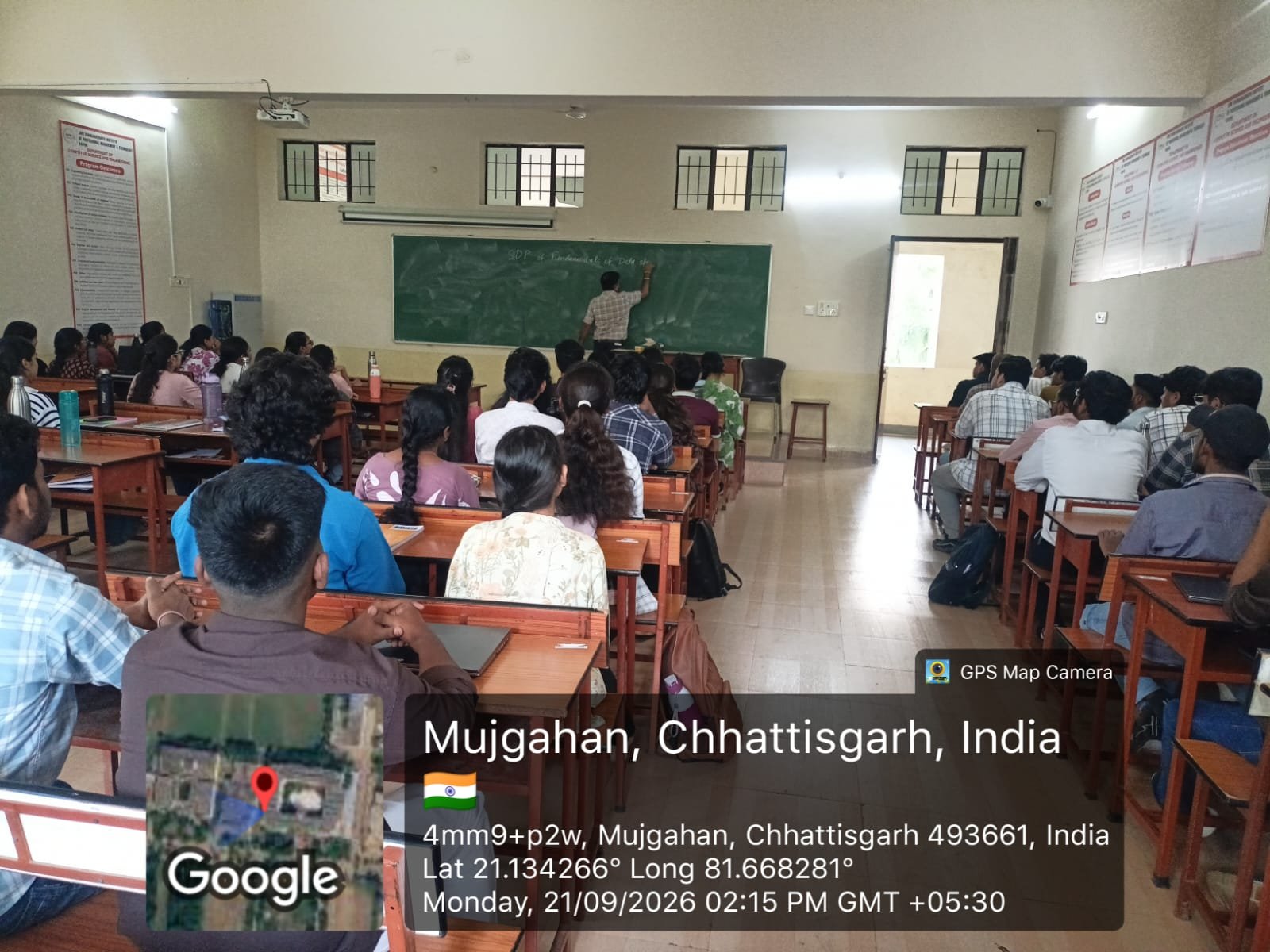
Raipur, September 25, 2026: The Department of Computer Science and Engineering (CSE) at Shri Shankaracharya Institute of Professional Management & Technology (SSIPMT), Raipur, successfully concluded a five-day Student Development Program (SDP) on Fundamentals of Data Structures, conducted from September 21 to September 25, 2026. The programme attracted around 190 B.Tech students, providing them with structured learning opportunities to strengthen their programming fundamentals and computational problem-solving abilities.
The initiative aimed to bridge the gap between theoretical understanding and practical implementation by helping students develop a strong foundation in data structures, algorithms and efficient programming techniques. Through faculty-led sessions, coding activities and collaborative problem-solving, the programme emphasised the importance of logical reasoning and algorithmic thinking in modern software development.
Strengthening Core Computer Science Concepts
Data structures play a crucial role in organising information, managing memory and developing efficient software applications. A strong understanding of these concepts also supports students preparing for technical interviews, coding assessments and software engineering roles.
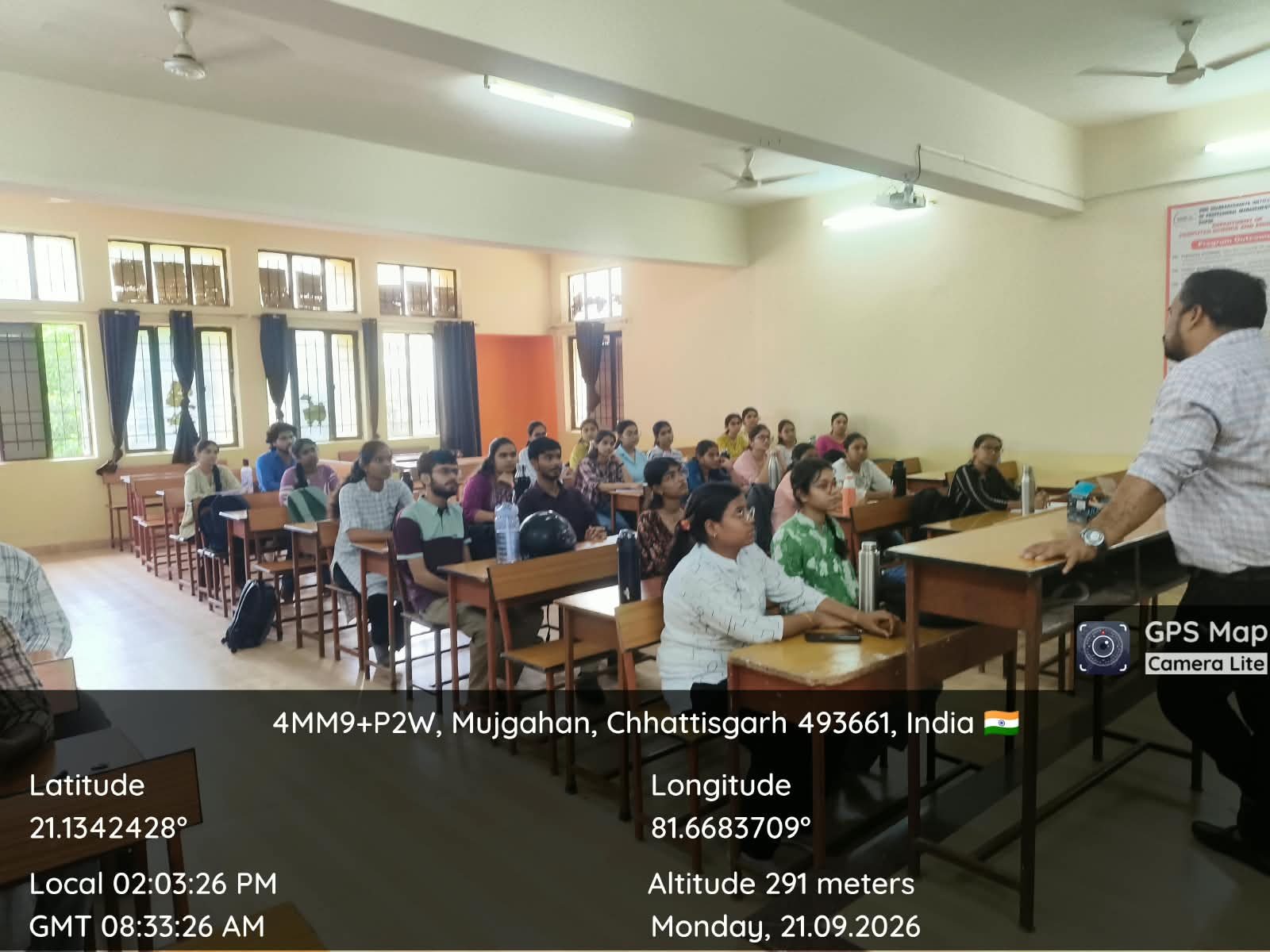
The SDP covered a broad range of fundamental concepts, including linear data structures such as arrays, linked lists, stacks and queues, as well as non-linear data structures such as trees and graphs.
Participants were also introduced to time-complexity analysis and algorithmic optimisation, helping them understand how to assess the efficiency of different programming approaches. The programme encouraged students to connect theoretical concepts with practical coding problems and identify suitable data structures for different computational requirements.
Faculty-Led Technical Sessions and Practical Learning
The five-day programme was conducted by faculty members from the Department of Computer Science and Engineering, who guided students through conceptual explanations, implementation techniques and practical problem-solving exercises.
- Dr. Rakesh Kumar Khare, Associate Professor, CSE Department, led sessions focusing on structural logic, memory allocation concepts and performance optimisation techniques.
- Mr. Deepak Rao Khadatkar, Assistant Professor, CSE Department, guided students through interactive coding activities, with emphasis on implementing data structures and debugging code.
- Mr. Vaibhav Chandrakar, Assistant Professor, CSE Department, served as the programme coordinator and conducted specialised sessions connecting theoretical data structures with practical software architecture and systematic problem-solving approaches.
The combined sessions helped participants explore the importance of selecting appropriate data structures, writing logical and maintainable code, and improving the efficiency of their solutions.
Coding Activities and Collaborative Problem-Solving
Practical engagement was a central feature of the Student Development Program. Coding activities, peer collaboration and doubt-clearing sessions encouraged students to apply their understanding to programming challenges.
The interactive format provided opportunities to discuss alternative approaches, identify coding errors and improve problem-solving strategies with faculty guidance. These activities also helped participants develop confidence in translating computational problems into structured algorithms and executable code.
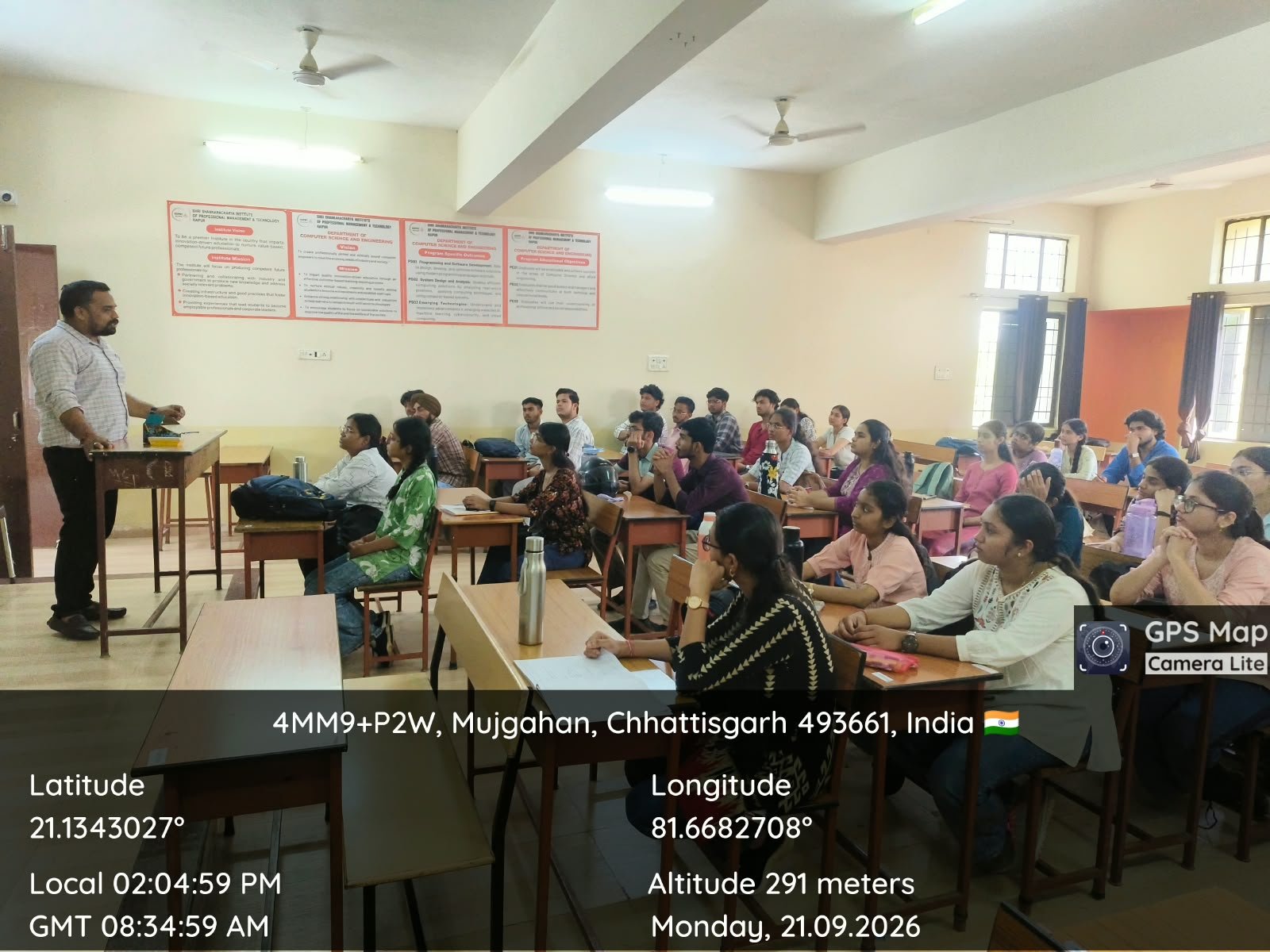
By engaging with both linear and non-linear data structures, students strengthened their understanding of how information can be organised and processed to meet different application requirements.
Preparing Students for Software Engineering Challenges
The programme highlighted the relevance of data structures and algorithms in software development, technical assessments and the design of efficient applications. Understanding these fundamentals helps aspiring engineers make informed decisions about data organisation, computational complexity and algorithm selection.
The five-day initiative also encouraged analytical thinking, independent learning and collaboration—skills that are valuable throughout an engineering career.
The participation of around 190 B.Tech students reflected strong engagement with core programming concepts and the importance of continuous technical skill development alongside regular academic learning.
SSIPMT Raipur Reinforces Its Focus on Technical Excellence
The successful conclusion of the Student Development Program demonstrated the Department of Computer Science and Engineering’s commitment to strengthening students’ foundational technical knowledge through structured and practice-oriented learning initiatives.
By combining faculty expertise with coding exercises and interactive discussions, the programme supported students in building the computational skills needed for advanced coursework, technical interviews and future software development projects.
Through initiatives such as this SDP, SSIPMT Raipur continues to encourage practical learning, algorithmic thinking and the development of industry-relevant competencies among its engineering students.
